About Hermes Ruiz — More intelligence has not produced better leaders.It has produced faster ones.
That is not the same thing.
The AI era did not create a new problem. It made an old one impossible to ignore.
Organizations were already making decisions without enough wisdom to back them. AI began executing those decisions faster, at greater scale, and with total confidence. The consequences arrived at the same speed.
Hermes Ruiz has spent 20+ years at the intersection of leadership, organizational culture, and emerging technology.
EB-1 · Extraordinary Ability.
He has keynoted for some of the largest organizations in Latin America and the United States. He has sat in the rooms where AI strategy is decided — and in the rooms where those decisions were later regretted. Both experiences inform his work.
Co-author, with Octavio Aguilar, of Chronicle of a Perfect Crime (2026).
What gets decided determines what survives.
Hermes Ruiz's work on human judgment and AI leadership is complemented by OleWow's focus on enterprise decision intelligence and governed decision-making.
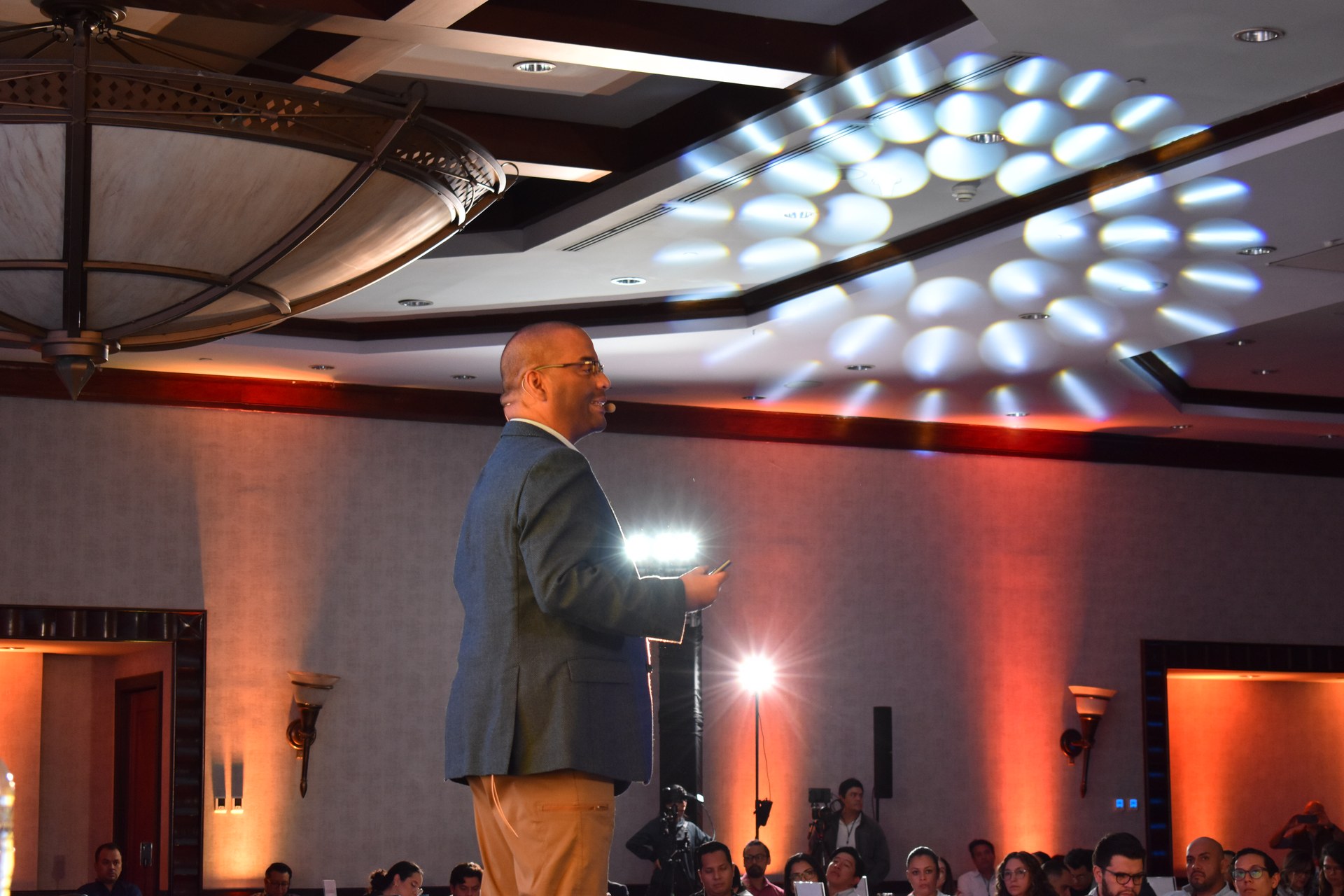
Speaker Reel
Watch Hermes in action
More than 20 years transforming how leaders think, decide and act.
REEL IN SPANISH — CONTENT IS UNIVERSAL · ENGLISH VERSION COMING SOON
Most organizations will continue deploying AI. They will add models. Run pilots. Hire AI leads.
A few will stop and ask the harder question: “Are the people making these decisions actually equipped to make them?”
That question is where Hermes begins.
Leadership before acceleration
Hermes Ruiz’s work connects leadership, organizational culture, and emerging technology. The central concern is not simply whether an organization can introduce AI. It is whether the people directing that technology have the judgment and responsibility to decide how it should be used. Faster execution does not resolve weaknesses in the decisions being executed.
Decision quality, human oversight, trust, and organizational culture appear as related leadership concerns. Technology is part of that conversation, but it does not replace the people who establish its purpose or remain answerable for its consequences.
From the stage to governance
The same concern with judgment also informs board advisory. In that setting, the published emphasis is independent oversight and translating AI complexity into governance decisions. The connection between speaking and advisory is the underlying subject: how leaders exercise responsibility when technology can execute decisions faster than an organization can examine them.
Related perspectives
- Leadership keynotes
Decision quality, judgment, culture, and trust are the subjects of the keynote collection.
- Board advisory
Independent oversight places the consequences of AI deployment within the governance conversation.