article
3 min readThe Hidden Cost of a Wrong AI Decision
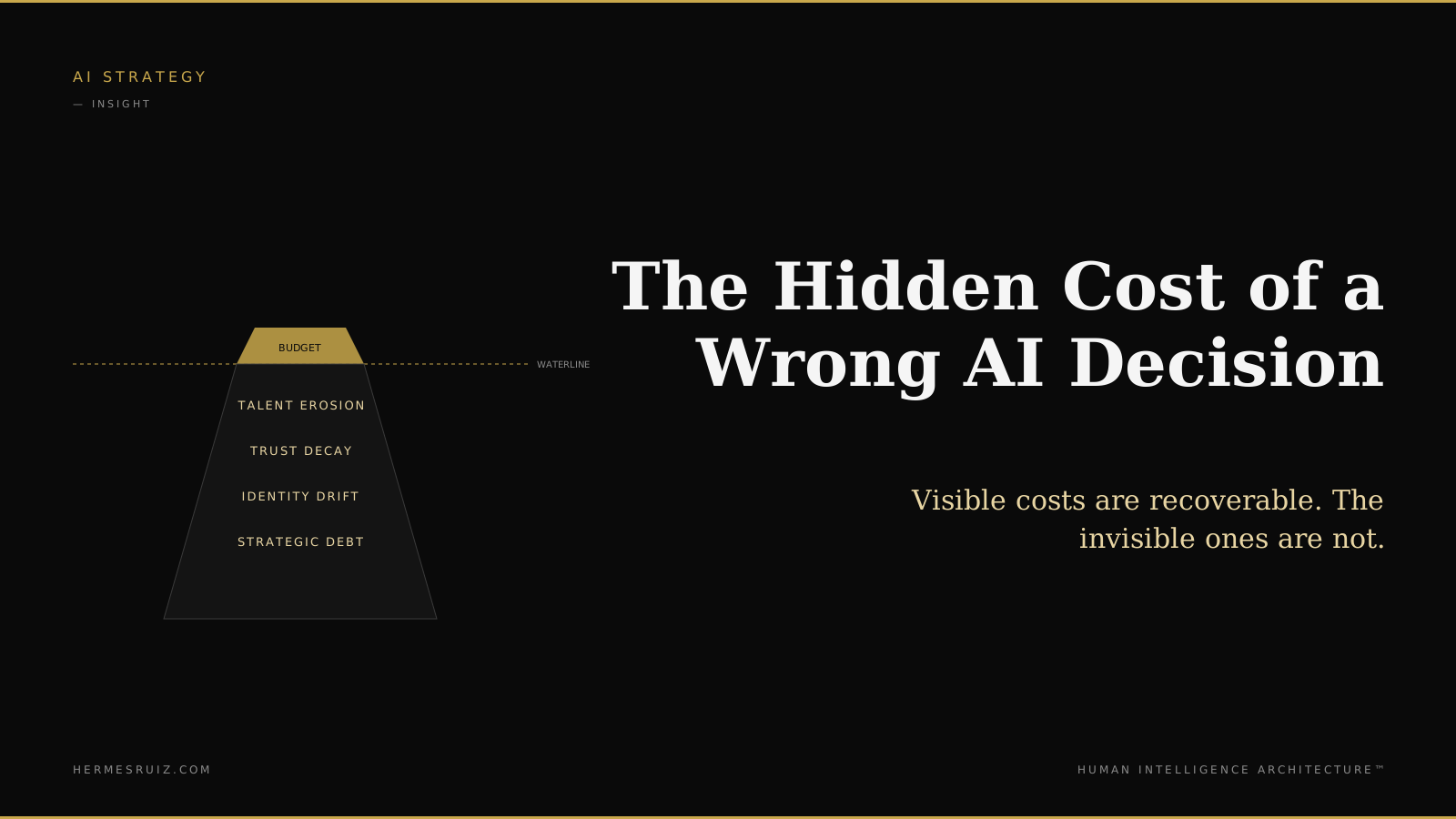
The visible costs of bad AI decisions are recoverable. The invisible ones — talent, trust, trajectory — are not.
# The Hidden Cost of a Wrong AI Decision
Organizations are excellent at calculating the visible costs of bad AI decisions: the failed implementation, the wasted budget, the consultant fees, the replatforming. These numbers are uncomfortable but manageable. They appear in post-mortems and board presentations.
The invisible costs never appear on a spreadsheet. They compound silently.
## The Costs That Don't Show Up
**Talent exodus you won't see coming.**
The best people in any organization are the first to know when leadership doesn't understand what it's doing. When AI decisions are made without strategic clarity — when tools are chosen for optics, when automation is applied without purpose, when people are told to "use AI" without being told why — your most capable employees draw a conclusion. They don't announce it. They update their LinkedIn profiles.
**Trust erosion that takes years to rebuild.**
Every bad AI decision teaches your people something about how leadership makes decisions. If that lesson is "they don't think it through," "they prioritize novelty over effectiveness," or "our input doesn't matter" — you have a trust deficit that no subsequent initiative will easily overcome.
**Strategic trajectory locked in by defaults.**
The most dangerous AI decisions are not the visible failures. They are the invisible successes — implementations that work technically but encode the wrong values, the wrong priorities, the wrong model of what your organization is for. These become infrastructure. Infrastructure becomes identity. Identity is very hard to change.
## The Compounding Effect
Wrong AI decisions compound differently than financial losses. A bad investment loses money. A bad AI decision changes the system that makes future decisions. It trains people, processes, and sometimes actual models to replicate its assumptions.
This is why the first AI decisions an organization makes matter disproportionately. They are not just decisions — they are templates.
## What Prevents This
Prevention is not technical due diligence. Any competent technology team can evaluate whether a tool works. Prevention requires asking a different set of questions before the decision:
- What does this decision assume about the people affected by it?
- What becomes harder to change if this decision succeeds?
- Who benefits from this decision being made quickly?
- What would we have to believe for this to be wrong?
These are not engineering questions. They are Human Intelligence Architecture questions — the capacity to think clearly about decisions before they become structures.
More perspectives
Want to discuss this?
Hermes Ruiz works with executives who take these questions seriously.
Book Hermes →