article
3 min readWhat Separates AI Leaders from AI Followers
It's not speed. It's not budget. It's not even talent. The gap between AI leaders and AI followers is architectural.
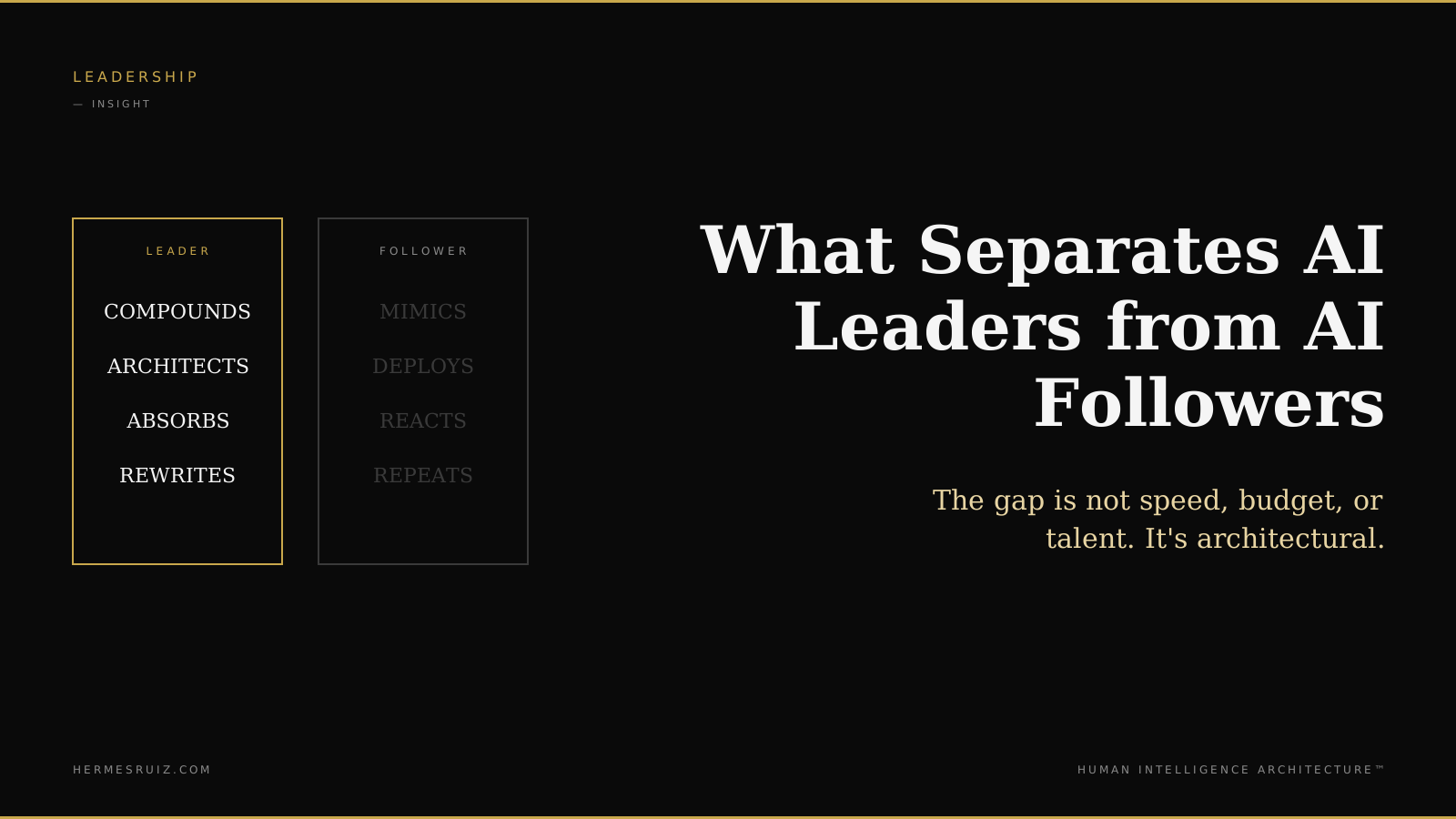
# What Separates AI Leaders from AI Followers
The conventional explanation for why some organizations succeed with AI and others don't focuses on resources: budget, talent, data infrastructure, executive sponsorship. These matter. They are not the primary variable.
The primary variable is architectural — how the organization thinks before it acts.
## The Follower Pattern
AI followers share recognizable characteristics. They adopt AI reactively — in response to competitor moves, board pressure, or consultant recommendations. They measure success by implementation speed and tool count. They treat AI as a solution looking for problems.
Most importantly: they make AI decisions before they have made the organizational decisions that AI depends on. They deploy before they have clarity on purpose. They automate before they understand what they are automating. They scale before they know what they are scaling.
The result is not transformation. It is expensive mimicry.
## The Leader Pattern
AI leaders make a different first move. Before they ask "which AI tools should we use," they ask "what kind of organization do we need to be to use AI well?"
This question sounds philosophical. It is intensely practical. It forces decisions about data governance, decision rights, human-AI collaboration protocols, and organizational values — decisions that, once made, make every subsequent AI decision faster, cheaper, and more effective.
AI leaders also share a different relationship to uncertainty. They do not wait for certainty before acting — the AI landscape will never be certain. But they build the judgment infrastructure that allows them to act intelligently under uncertainty.
## The Three Architectural Decisions
**1. Where does human judgment end and AI judgment begin?**
This boundary must be explicit, documented, and revisited regularly. Organizations that leave it implicit will find it decided for them — by convenience, by vendor defaults, by whoever is most confident in the room.
**2. How does the organization learn from AI decisions?**
AI followers treat AI outputs as answers. AI leaders treat them as inputs — into a learning system that continuously improves the quality of human judgment. The feedback loop is the infrastructure.
**3. Who owns the AI agenda?**
Not IT. Not the Chief AI Officer (if one exists). The answer is: the same people who own the strategic agenda. When AI strategy is separated from business strategy, you get technically successful implementations that are strategically irrelevant.
## The Compounding Advantage
The gap between AI leaders and AI followers is not static. Every good architectural decision an AI leader makes compounds. Their systems learn. Their people develop judgment. Their culture builds the muscles for intelligent adaptation.
Followers who wait for the technology to mature before building this architecture will find that the technology has matured — and their competitors have a decade of organizational learning they cannot buy.
More perspectives
Want to discuss this?
Hermes Ruiz works with executives who take these questions seriously.
Book Hermes →