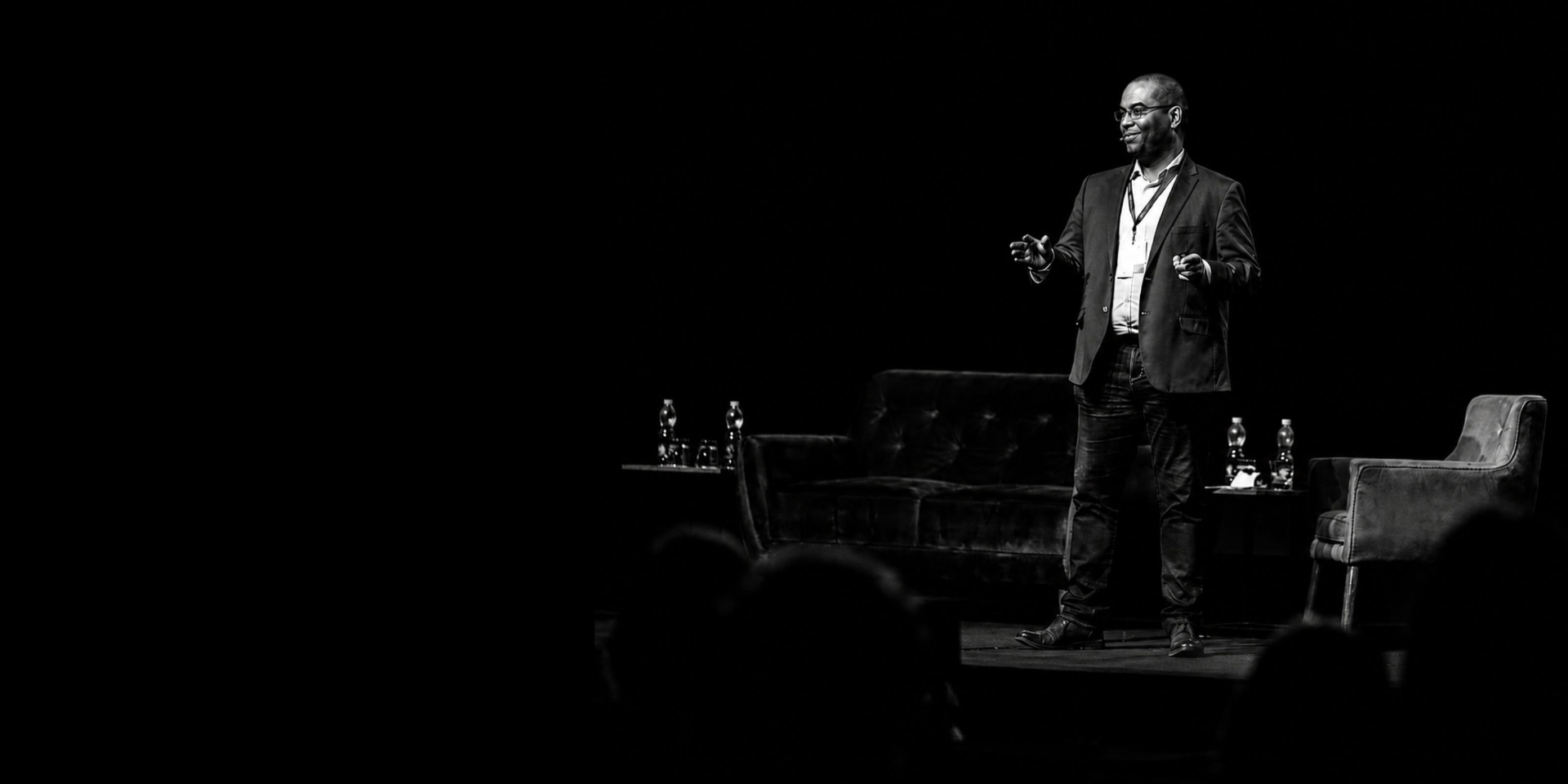
Designing Organizations That Can Think
"Most organizations are excellent at executing. Very few are designed to think. AI is about to make the difference decisive."
A strategic keynote on organizational design for the AI era — how to build the structural conditions for collective intelligence, adaptive decision-making, and organizational wisdom.
- 01Understand the difference between organizations that execute and organizations that think
- 02Discover the structural conditions that produce collective intelligence
- 03Learn how to redesign decision architecture for an AI-accelerated world
- 04Walk away with concrete organizational design principles
CHROs, COOs, organizational design leaders, and senior HR teams. Innovation conference audiences. Leaders responsible for how organizations are structured and how they operate.
Available virtual or in-person, with optional executive workshop and Q&A.
Look at the conditions around the decision
Choose this keynote when the central question concerns how the organization is structured to think, not only how it executes. Its subject is the relationship between organizational design, collective intelligence, and decisions in a context shaped by AI.
For people, operations, and organizational design leaders, prepare the brief around an actual decision process. Describe how a question enters the organization, who works on it, and where a choice is made. Keep the description grounded in practice rather than relying only on the formal organization chart.
Examine thinking as well as execution
A useful preparation exercise is to separate the work of carrying out a decision from the work of forming it. Where can people challenge the initial question? How do different interpretations reach the discussion? At what point does the organization expect judgment rather than compliance with an existing answer?
These questions keep the conversation connected to the keynote’s structural focus. They do not require you to arrive with a redesign already chosen. Bring the tensions and uncertainties that make the current arrangement worth examining, including perspectives from people who experience the process differently.
Continue with a specific design question
After the keynote, choose a decision process to revisit. Ask which conditions support collective thinking and which questions about the structure remain unresolved. Distinguish a proposed change from the reason for making it, and identify what the team would need to understand before proceeding.
For organizers comparing the collection, this topic places organizational structure and decision architecture at the center. It is distinct from a personal development conversation or a broad readiness diagnosis. Compare the descriptions to decide which question best matches the audience and the purpose of your event.
Further reading
- AI and leadership insights
Related perspectives on human judgment, decisions, and leadership.
- Leadership keynote collection
Compare the published subjects and audiences, from organizational readiness to judgment and self-assessment.