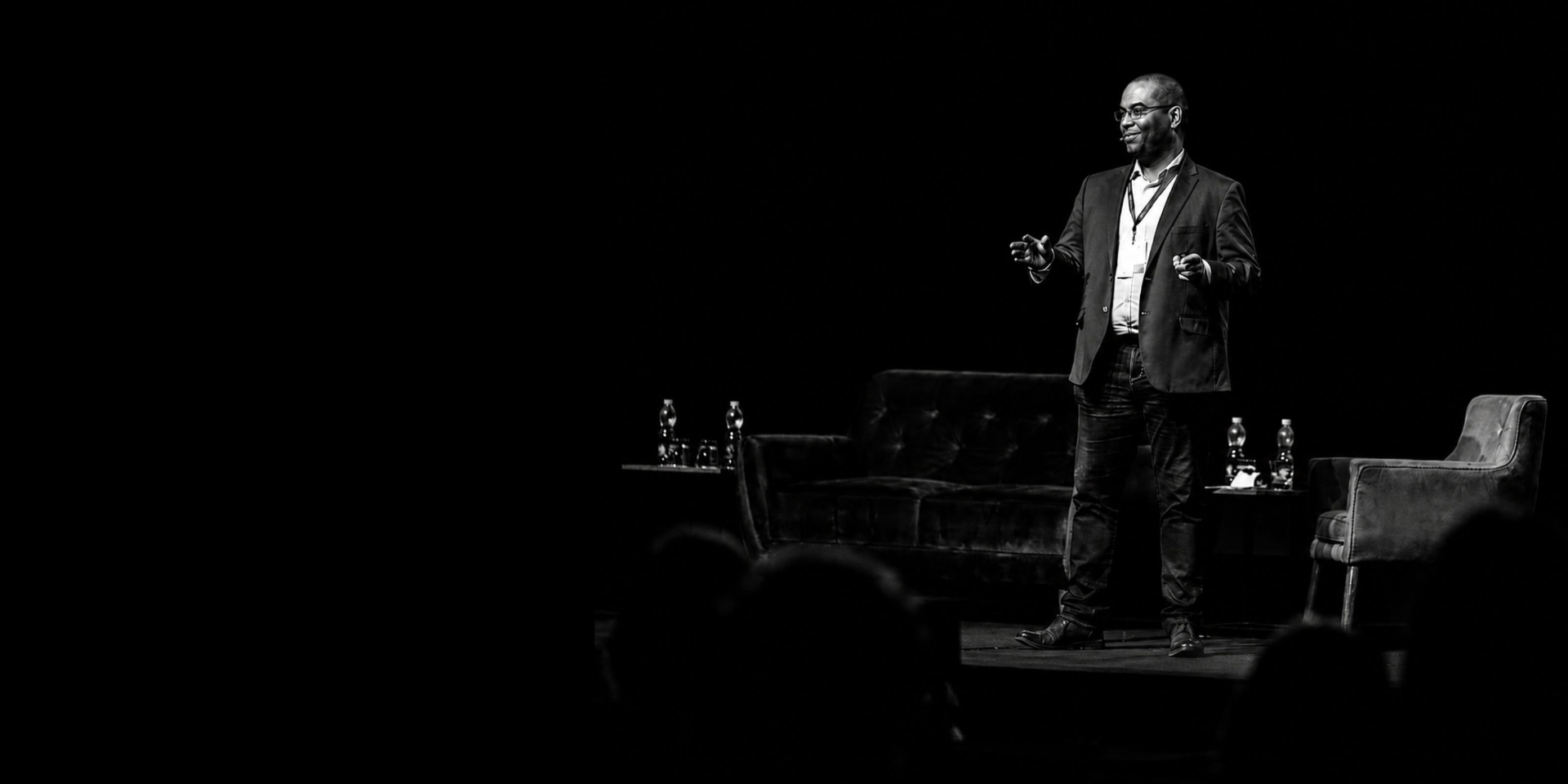
The Human Algorithm
"You are not competing with AI. You are being evaluated by your own intelligence — and most people have never been trained to pass that exam."
A personal keynote on developing the cognitive architecture that makes human leaders irreplaceable — not despite AI, but in relation to it.
- 01Discover what human intelligence actually is — beyond IQ and EQ
- 02Learn the cognitive patterns that AI cannot replicate (and which ones it already has)
- 03Understand how to develop judgment, wisdom, and strategic clarity in an AI world
- 04Leave with a personal development framework for the AI era
Individual leaders, high-potential talent programs, and personal development conferences. Particularly powerful for audiences who feel threatened by or uncertain about AI's impact on their careers.
Available virtual or in-person, with optional executive workshop and Q&A.
Make the leadership question personal
Choose this keynote when the audience needs space to consider its own development in relation to AI. The focus is the person exercising judgment: how leaders think, what they understand about human intelligence, and how they approach wisdom and strategic clarity.
For a leadership program or development event, describe the uncertainty participants are bringing. Is the concern about their role, their decisions, or the way they understand their contribution? Keep the brief centered on that human question rather than turning it into a demonstration of tools.
Bring a decision that required your judgment
Before the event, recall a situation in which an answer alone was not enough. What did you need to interpret? Which assumptions did you question? What made the choice yours to explain, even if other people or systems contributed information?
Use that example to reflect on your thinking without treating it as a performance review. Notice where you had clarity and where you would want to develop it. The preparation is an invitation to examine your reasoning, not to claim that you already know how every future AI-related decision should be handled.
Continue with a development question
After the keynote, identify a question about your own judgment that deserves further attention. Keep it specific enough to revisit in your work. You might consider how you interpret an unfamiliar answer, explain a choice, or remain open to a perspective that challenges your preferred conclusion.
For organizers, this is the personal development entry in the keynote collection. Compare it with the topics centered on organizational readiness, structure, and senior leadership self-assessment. The distinction can help you choose a conversation that fits the audience rather than asking a single event to address every AI concern.
Further reading
- AI and leadership insights
Related perspectives on human judgment, decisions, and leadership.
- Leadership keynote collection
Compare the published subjects and audiences, from organizational readiness to judgment and self-assessment.