article
3 min readThe AI Governance Crisis No One Is Talking About
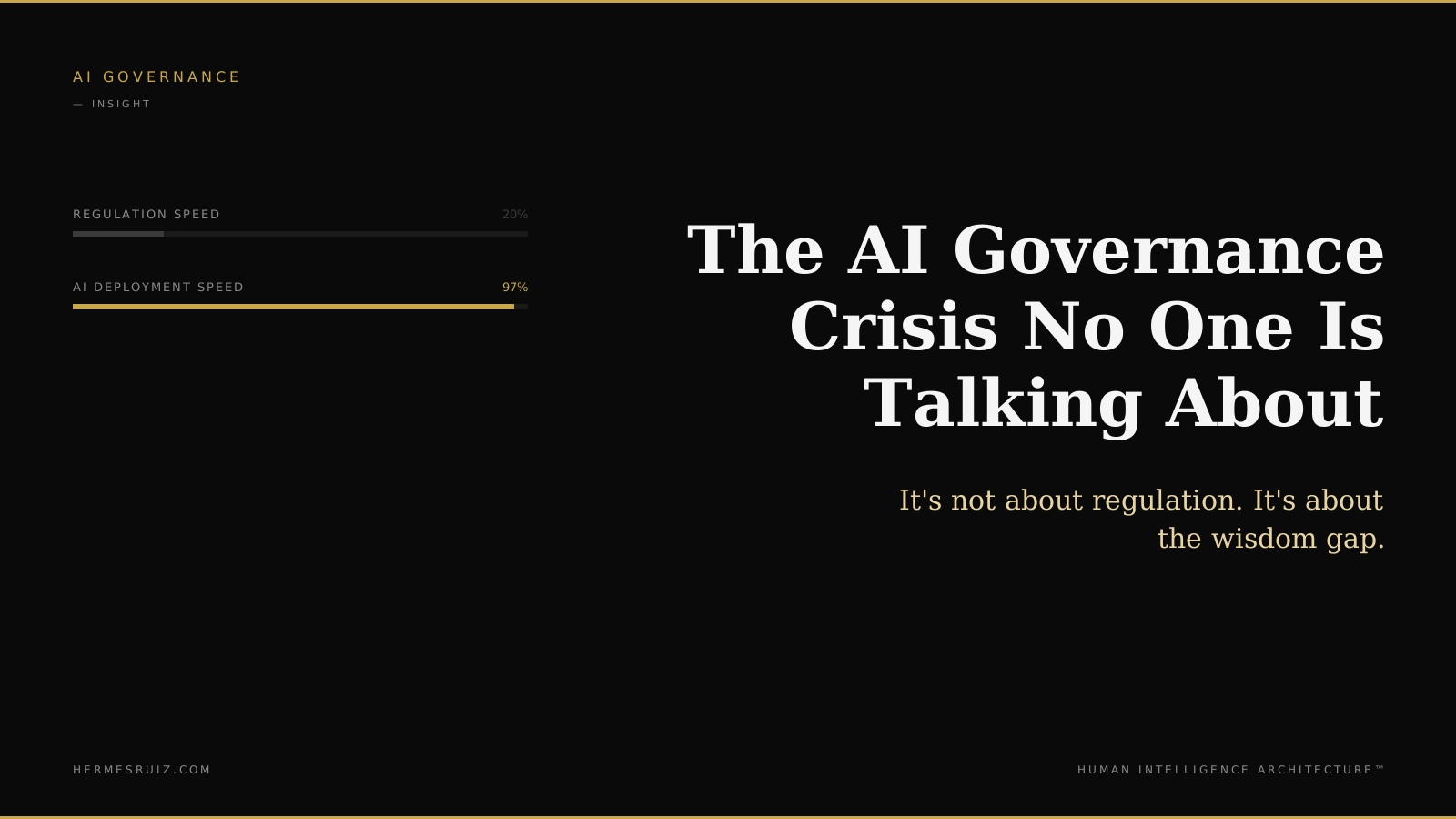
The AI governance crisis isn't about regulation. It's about the gap between the decisions being made and the wisdom required to make them.
# The AI Governance Crisis No One Is Talking About
Everyone is talking about AI regulation. The EU AI Act, executive orders, voluntary commitments, safety frameworks. This conversation is necessary. It is not sufficient.
The governance crisis that will define the next decade is not regulatory. It is institutional. It is the gap between the decisions organizations are making about AI right now — today, this quarter — and the wisdom required to make those decisions well.
## The Crisis Is Already Here
It is not coming. It is not a risk on a horizon. It is present in every organization deploying AI without clear governance: in the biased hiring algorithms already filtering candidates, in the credit scoring models already affecting livelihoods, in the content recommendation systems already shaping what millions of people believe.
The crisis is not hypothetical. It is a daily accumulation of consequential decisions made without adequate accountability structures.
## Why Regulation Won't Solve It
Regulation is necessary but insufficient for three reasons.
First, regulation moves at the speed of legislation. AI moves at the speed of deployment. The gap between these speeds is where most of the consequential decisions live.
Second, regulation sets floors. It tells organizations what they cannot do. It does not tell them what they should do — how to build the internal judgment capacity to navigate the vast space between legal and wise.
Third, and most importantly: regulation is external accountability. The decisions that most need governing happen before they become visible enough to regulate. They happen in product meetings, in vendor selection processes, in algorithmic design choices that embed values no compliance team will ever audit.
## What Real Governance Requires
Real AI governance is not a compliance function. It is an intelligence function.
It requires people who understand AI technically enough to know what questions to ask, strategically enough to know which questions matter, and ethically enough to know which questions cannot be delegated.
This combination is rare. It is not found in most compliance departments, not found in most technology teams, and not found in most boards.
The organizations that will govern AI well are the ones building this capacity now — not waiting for regulation to define the floor, but building their own architecture of judgment that sits far above it.
## The Wisdom Gap
The deeper crisis is this: we are making decisions with AI that require wisdom, and we are using organizations that were not designed to produce wisdom at scale.
Speed produces optimization, not wisdom. Efficiency produces consistency, not wisdom. Wisdom requires time, perspective, discomfort, and the willingness to be wrong — none of which are valued by the systems driving most AI deployment.
Human Intelligence Architecture is the discipline of designing organizations that can produce wisdom at the speed AI requires. It is the most important organizational design challenge of our time.
More perspectives
Want to discuss this?
Hermes Ruiz works with executives who take these questions seriously.
Book Hermes →